

ARGUMENT ANALYSIS
on Jan 14, 2025
at 2:22 pm
The justices heard arguments in Thompson v. United States on Tuesday morning. (Katie Barlow)
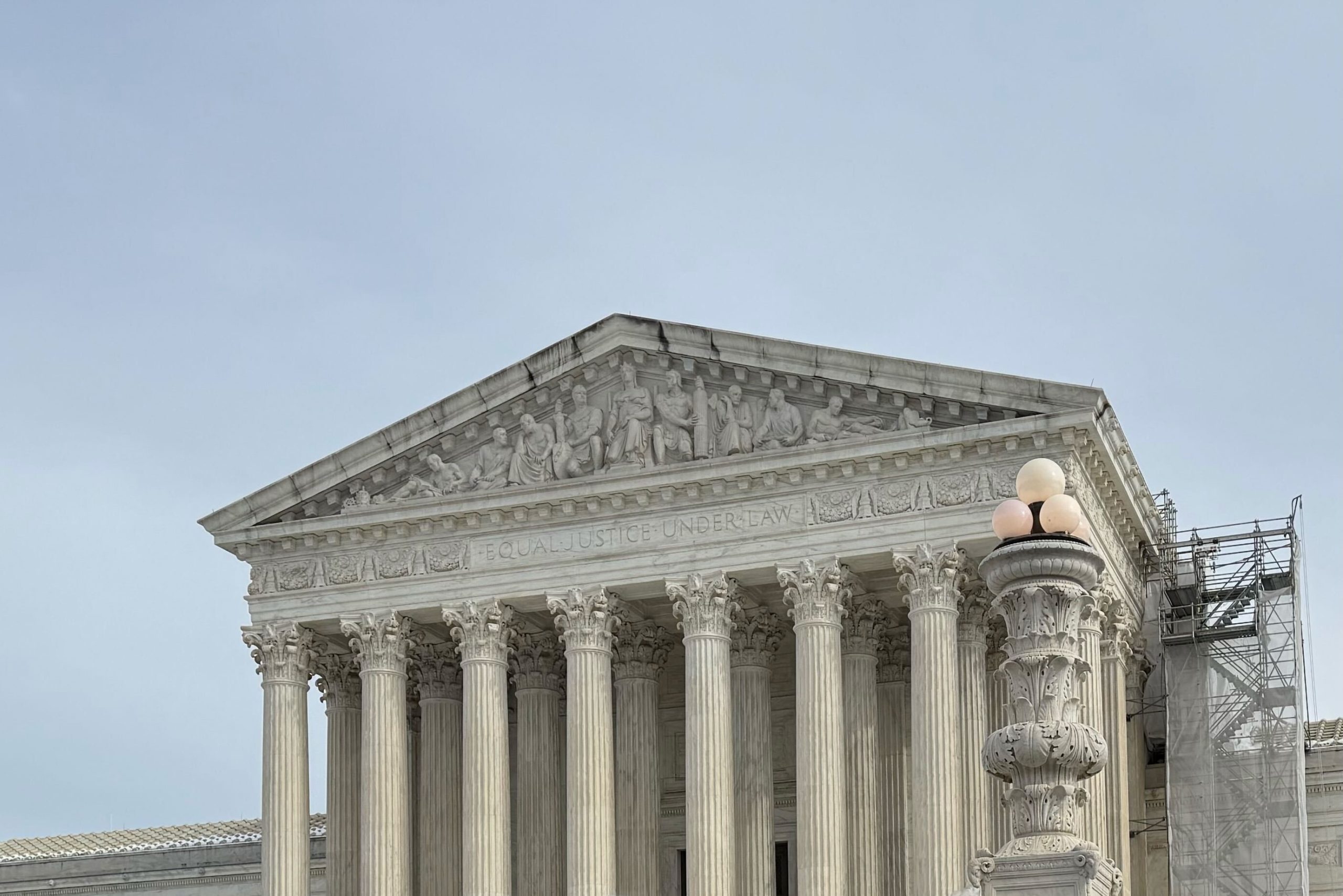
The Supreme Court on Tuesday grappled with the case of Patrick Daley Thompson, a former Chicago alderman and member of Chicago’s most storied political dynasty. Thompson served four months in a federal prison for making false statements to bank regulators about loans he took out and did not repay. He contends that the federal law under which he was convicted does not apply to statements – like his – that are misleading but not false. But after just over 75 minutes of oral arguments, it wasn’t clear whether the justices would actually decide that legal question, or whether a majority of the justices believed that a ruling on that question would even help Thompson.
Thompson – who is the grandson of former Chicago mayor Richard J. Daley and the nephew of former mayor Richard M. Daley – was indicted in 2020 on charges that he had violated a federal law that makes it a crime to make false statements to influence the Federal Deposit Insurance Corporation.
Prosecutors charged that he had taken out three loans, totaling $219,000, from Washington Federal Bank for Savings, a small bank in the city’s Bridgeport neighborhood, where Thompson lives and the Daleys made their name. Thompson never filled out paperwork for the second and third loans. After the bank failed, they contended, Thompson told a loan servicer hired by the FDIC to recover the bank’s money that he had borrowed $110,000, the amount of the first loan.
After he was convicted by a jury, Thompson appealed. He argued that although his statements to the loan servicer may have been misleading, because he didn’t mention the second and third loans, totaling $109,000, he did not say that he only owed $110,000.
Representing Thompson, Chris Gair told the justices on Tuesday that the law under which Thompson was convicted only punishes false statements and does not apply to statements that are true but misleading. Because the word “false,†Gair emphasized, means “not true,†it would be implausible to suggest that a law punishing false statements applies to true statements. When Congress wants to prohibit both false statements and true but misleading statements, he added, it does so specifically, as it does elsewhere in the U.S. Code. He urged the justices to send Thompson’s case back to the lower courts for them to determine whether his client’s statements were in fact false or only misleading.
Assistant to the U.S. Solicitor General Caroline Flynn, representing the federal government, argued that the law bars “any false statement.†A statement is false, she continued, if it conveys a message to a listener that is not true when placed in context. When Thompson told the FDIC in this case that he was “shocked,†that he had no idea where the invoice for $269,000 came from, and that he had borrowed $110,000, he made a false statement, Flynn concluded.
As the case came to the court, the dispute sometimes seemed to be less about the scope of the law under which Thompson was convicted – that is, whether it also applies to statements that are misleading – but instead about what it means for a statement to be false at all.
At oral argument on Tuesday, Gair agreed that the law could apply to statements that are not literally false, explaining that whether a statement is false instead depends on the context in which it was made. And that context, he said, includes the question that was asked to elicit the statement, the statement itself, and the objective facts surrounding it. For example, he observed, if Thompson had said that he had “only borrowed $110,000 and not a penny more,†it would be a false statement.
Flynn agreed that whether a statement is false can hinge on its context, but she rejected Gair’s definition of that context. The jury, she said, should “address a speaker’s meaning the same way the original listener would have in light of other parts of the conversation and other circumstances that naturally bear on meaning.†A “statement is untrue,†she continued, “if it states only a portion of the truth on the subject it addresses in a context where the statement would be taken as both accurate and complete.â€
Justices Brett Kavanaugh and Neil Gorsuch questioned whether the court should use Thompson’s case as an opportunity to weigh in on what constitutes a “false statement†more broadly. Kavanaugh noted that if the court were inclined to do so, it might want to wait until it has briefing, including from friends of the court, specifically addressing that question, because of the possibility that its answer will have a wider impact.
Gorsuch agreed. If we are going to address the definition of falsity, he indicated, “we might want to consult a few philosophers while we’re at it,†and the briefing in the case might have been different. He emphasized that the answer to the question could have “ripple effects†throughout the federal criminal code because there are “a lot of†statutes that criminalize false statements.
Justice Amy Coney Barrett offered a simpler solution. She noted that the jury instructions used in one part of the country indicate merely that a statement is false if it is untrue when it is made. She asked Flynn whether the court could merely repeat that definition; Flynn assented.
Several justices resisted Gair’s proposal to send the case back to the lower courts for them to determine whether his statements were false or misleading. They suggested that even if they interpreted the law as applying only to false statements, Thompson’s statements could be construed as false.
Justice Ketanji Brown Jackson, for example, asked Gair why, when the amount of money that Thompson borrowed and owed is “a knowable amount of money with one correct answer,†and his response to an invoice from the loan service was “tantamount†to a false statement, the court should send the case back for another look.
Gair insisted that the invoice did not have the details of Thompson’s loans and had instead indicated only that Thompson’s unpaid balance was $269,000. Thompson then said that he had “borrowed $110,000†and “had a promissory note for $110,000.†“That statement,†Gair stressed, “is absolutely true.â€
Justice Sonia Sotomayor also indicated that, in her view, Thompson’s statements to regulators were false. If, after receiving the invoice from the loan servicer, she said, Thompson said that he had borrowed $100,000 when he had in fact borrowed far more, “it’s literally false.â€
Sotomayor also observed that the instructions given to the jury didn’t tell them that they could convict Thompson if his statements were misleading. The question, she said, is whether a reasonable juror would have concluded that he made a false statement.
Justice Elena Kagan focused on this point as well, asking Gair skeptically whether he was contending that no reasonable jury could have concluded that Thompson’s statement – that he had borrowed $110,000 – was false. Because although Thompson has contended that the district court believed that the law also applied to misleading statements, the jury instructions only indicated that it applied to false statements. You can only win, Kagan told Gair, if no reasonable jury could have found this statement to be false. And if the court doesn’t agree, she posited, it should say so; it would be pointless to send the case back to the lower courts.
Justice Samuel Alito also appeared to question whether there was any need to send the case back to the lower court. He asked how the issue of “misleading statements†had even been injected into case, suggesting that it might have been through “sloppy work†by the court of appeals. When Thompson is arguing that no reasonable jury could view his statement as false in context, Alito said, why should the case go back to the court of appeals – as “punishment†for introducing the misleading element?
Gair urged the court to go ahead and decide the legal question raised in his petition for review, noting that the statute applies broadly and could be used to punish a number of dealings between individuals and financial institutions. The court should decide the legal issue, he said, to ensure that prosecutors do not “overenforce†the law – a frequent concern for the justices in cases dealing with federal fraud laws.
And at least two justices did appear to support the idea that the court should focus on the legal question. Justice Brett Kavanaugh observed that the legal issue was the question before the court. The prospect of having the justices parse Thompson’s statements about the loan was not, he said, “what I thought we granted review to decide.â€
Justice Neil Gorsuch echoed Kavanaugh’s sentiment, telling Flynn that the Supreme Court had not taken up Thompson’s case to decide whether a reasonable juror could believe that Thompson had made a false statement. Instead, he said, “we took it to decide a legal question – whether the statute permits a conviction for misleading convictions in addition to false ones.â€
A decision in the case is expected by summer.
This article was originally published at Howe on the Court.Â