

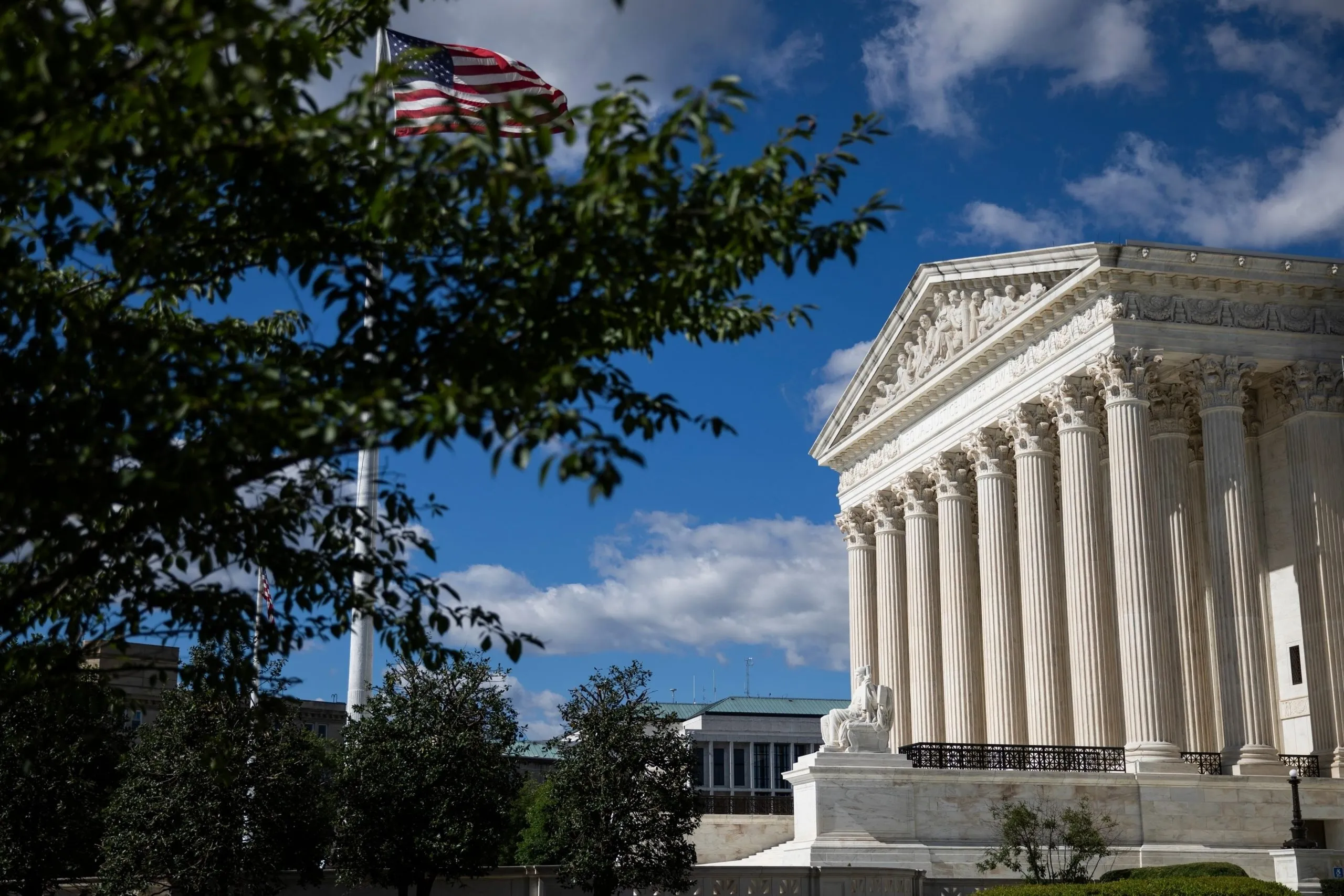
On May 15, the Supreme Court will hear oral arguments in the federal government’s efforts to be able to generally implement President Trump’s executive order ending birthright citizenship – the guarantee of citizenship to virtually everyone born in the United States.Â
The dispute is one of the relatively rare proceedings that came to the justices as an emergency appeal – on the so-called “shadow docket†– only to be set for oral arguments.Â
Here is some more information about the dispute and the upcoming oral argument.Â
What are the justices actually considering on Thursday?
Though the dispute comes to the justices through challenges to Trump’s effort to end birthright citizenship, the primary issue before the court on Thursday is whether lower-court judges can issue what are known as universal injunctions to block an order nationwide. With a universal injunction, a federal judge (or several in this case) can bar the government from enforcing an executive order – or, in another case, a law or policy – anywhere in the country. The Trump administration, which has been blocked by many such injunctions in recent months, argues that the practice is unconstitutional.Â
In virtually all of the cases in which the Supreme Court hears oral arguments, the justices have done so after the party that lost in the lower court filed a petition for review, known as a petition for certiorari. The petition begins with a “question presented†– the question that the party is asking the justices to take up. Unless the Supreme Court indicates otherwise, that question is the issue before the justices.Â
But in these cases, the Trump administration did not file a petition for review; instead, it filed emergency applications to partly block the orders issued by district courts in Maryland, Massachusetts, and Washington. There are no questions presented in its applications, and then-Acting Solicitor General Sarah Harris (the government’s top lawyer in the Supreme Court), who filed the applications, characterized them as making only a “‘modest’ request†– to limit the scope of the district courts’ orders, rather than addressing the “important constitutional questions†raised by Trump’s executive order on birthright citizenship. But the justices, of course, can take the discussion at Thursday’s argument wherever they want.Â
How many cases are there?
There are three cases, which the court will hear consolidated as one on Thursday: Trump v. CASA, filed by immigrants’ rights groups and several pregnant women in Maryland; Trump v. Washington, filed in Seattle by a group of four states; and Trump v. New Jersey, filed in Massachusetts by a group of 18 states, the District of Columbia, and San Francisco.Â
What happened in the lower courts?Â
President Donald Trump set the events leading to Thursday’s argument in motion on Jan. 20, when he signed an executive order ending birthright citizenship. Under the order, which was originally slated to go into effect on Feb. 19, children born in the United States would not be automatically entitled to U.S. citizenship if their parents were in this country illegally or temporarily – for example, on a work or student visa.Â
Birthright citizenship was written into the Constitution following the Civil War when the 14th Amendment was adopted in 1868. With the words “all persons born or naturalized in the United States,†the amendment established the citizenship of Black people, including former enslaved people freed during the war, who had been denied that right in the Supreme Court’s notorious 1857 decision in Dred Scott v. Sandford.Â
Several different challenges to Trump’s order followed in federal courts around the country. In Seattle, a group of four states – Washington, Arizona, Illinois, and Oregon – brought a lawsuit that was later combined with a lawsuit filed by a group of expectant mothers.Â
Senior U.S. District Judge John Coughenour barred the Trump administration from implementing the order, calling it “blatantly unconstitutional.†A federal appeals court in San Francisco rejected the government’s request to put Coughenour’s injunction on hold except as to the individual plaintiffs while its appeal moved forward.Â
In Maryland, five pregnant women who fear that their children will not be eligible for U.S. citizenship and two immigrants’ rights groups that say they have hundreds of thousands of members filed their own lawsuit.Â
U.S. District Judge Deborah Boardman on Feb. 5 became the second judge to prohibit the government from enforcing Trump’s executive order. “No court in the country,†she said, “has ever endorsed the president’s interpretation. This court will not be the first.â€Â
A federal appeals court in Richmond, Va., declined to partially block Boardman’s ruling. One judge – Paul Niemayer – dissented from that decision, calling the government’s request a “modest motion.â€Â
And in Massachusetts, a group of 18 states and two cities, led by New Jersey, also went to court. U.S. District Judge Leo Sorokin issued an injunction barring the enforcement of the executive order anywhere in the country. A federal appeals court in Boston refused to partially pause Sorokin’s ruling.Â
How did these cases get to the Supreme Court?
On March 13, Harris came to the Supreme Court, asking the justices to partially block each of the three orders by Coughenour, Boardman, and Sorokin. Instead of keeping Trump’s order on hold nationwide, she argued, the district judges should only be allowed to block enforcement with respect to the individual challengers, the specific members of the groups challenging the executive order who are identified in the complaint, and – if the states have a legal right to sue – the residents of the states bringing the challenges. The Trump administration should also be allowed to develop guidance about how it would implement the executive order, Harris wrote.Â
On April 17, the Supreme Court announced that it would hear oral arguments in the dispute on May 15 – just over two weeks after what would normally be its last oral argument of the term. It’s quite unusual for the justices to hear arguments outside their normal schedule, so although we don’t know exactly what their reasoning was, it suggests that at least some of them did not want to wait until the fall, when the case might have otherwise been argued, to hear and decide the government’s request.Â
What is the Trump administration’s main argument?Â
The Trump administration’s filings (which are virtually identical) acknowledge that the challenges to birthright citizenship “raise important constitutional questions with major ramifications for securing the border.†But its focus in the filings is not on whether Trump’s executive order violates the Constitution, but rather on the district courts’ use of universal injunctions.
The Constitution, the Trump administration argues, does not give federal judges the power to issue universal injunctions. Instead, the government contends, federal judges can only issue a judgment or order regarding the rights of the litigants in the case before them.Â
These kinds of universal injunctions, the Trump administration complains, “have reached epidemic proportions since the start of†Trump’s second term. Indeed, it writes, federal trial courts “have issued more universal injunctions†and temporary restraining orders “during February 2025 alone than through the first three years of the Biden Administration.†The large number of universal injunctions, the government says, has impeded the executive branch “from performing its constitutional functions before any courts fully examine the merits of those actions, and threatens to swamp this Court’s emergency docket.†(Notably, the president has issued far more executive orders in this period than any president in recent history.)
An alternative, the government suggests, would be for people who would be affected by the executive order to try to file a class action challenging the order and (among other things) seek temporary relief for the entire class. Doing so, the government observes, “avoids the asymmetric stakes of nationwide injunctions:†A ruling in a class action “binds the whole class,†but if one challenger loses its bid for a nationwide injunction, that “does not stop others from trying again.â€Â
What other arguments does the Trump administration make?
The Trump administration addresses the issue of birthright citizenship briefly, contending that the Constitution’s citizenship clause – which provides that everyone who is “born or naturalized in the United States, and subject to the jurisdiction thereof,†is a citizen of “the United States and of the State†in which they live – does not give everyone who is born in the United States automatic citizenship. People who are born in the United States, the government maintains, must be “subject to the jurisdiction†of the United States, which in turn hinges on whether someone “owes allegiance to, and is entitled to protection from, the United States.†It is not enough to guarantee someone citizenship, the government insists, that they are simply required to follow U.S. law. In particular, the Trump administration continues, children whose parents are in the country temporarily or without proper documentation “are not subject to the political jurisdiction of the United States†— which the Trump administration defines as owing allegiance to the United States, rather than simply being required to follow U.S. laws. (I covered the history of birthright citizenship at the Supreme Court in more detail in February.)
The government also asserts that the states challenging the order do not have a legal right to sue, known as standing. Although the lower courts concluded that children who were born in other states could travel to the challenger states, which would then have to shoulder the cost of medical care and social services because the children would not be eligible for federal assistance. But the states, the government counters, have not offered any evidence to suggest that such a “speculative chain of events would likely occur†– much less that it would happen before this dispute is resolved. States also cannot bring claims on behalf of their residents, the government adds.Â
What do the challengers say?Â
The challengers counter that there is no reason for the Supreme Court to weigh in on the broader question of whether universal injunctions are ever appropriate (or always inappropriate). What matters, they say, is whether such orders are proper in this case – which, they insist, they are.Â
First, they contend, the government has not shown that it will be permanently harmed unless the district courts’ orders are put on hold – one of the criteria that courts consider when deciding whether to grant temporary relief. “The nationwide injunctions,†the Washington challengers stress, “preserve the status quo that has existed for more than a century, and the federal government suffers no harm, much less irreparable harm, by continuing to follow long-settled laws while the appeals proceed.†Moreover, the states led by New Jersey stress, the appeals are moving quickly in each case, “with argument scheduled as early as June 4 in the Ninth Circuit.â€Â
Second, they note, the government has not even tried to “meaningfully†defend the constitutionality of the executive order, because it is “flagrantly unconstitutional,†the Washington challengers write. Therefore, they say, there is no real chance that the Supreme Court will ultimately grant review and reverse. Indeed, the states led by New Jersey suggest, “the emergency docket is no place to demand permission to violate this Court’s own binding precedents.â€Â
This case, they tell the justices, is a perfect example of one in which a universal injunction is needed to provide all of the challengers with complete relief. For example, they note, if the injunctions were instead limited only to the states challenging the executive order, and the residents of one of the challenging states were to give birth in a different state, or if residents of a state that did not challenge the order moved to one of the challenging states, the Washington challengers caution, the states “will suffer the same exact irreparable injuries to their sovereign and pecuniary interests as if there were no injunction at all.â€Â
But in any event, the challengers continue, the Trump administration is wrong when it argues that universal injunctions, by granting relief that benefits individuals and entities who are not part of the case, exceed the power of federal judges. “If that were true,†the challengers in the Maryland case contend, “the courts could not have granted remedies for school segregation or racial gerrymandering.â€Â
If the justices were to agree with the Trump administration, the Maryland challengers posit, “chaos would ensue,†because birth certificates – the documents normally used to establish U.S. citizenship – will not be enough even for children born in the U.S. whose parents are U.S. citizens. Instead, they suggest, state and local governments will have to develop new systems to verify citizenship, at significant expense, “and anxious parents-to-be will be caught in the middle.â€Â
What other arguments do the challengers make?Â
On the issue of birthright citizenship, they emphasize that the text of the 14th Amendment “guarantees citizenship to all born in the United States and subject to the jurisdiction thereof†– which the Supreme Court’s cases and the federal government have long recognized to include virtually all children born in the United States, regardless of (among other things) the immigration status of their parents.Â
And although the federal government attempts to narrow the scope of the phrase “subject to the jurisdiction,†the Washington challengers tell the justices, “the group of U.S.-born individuals not subject to the jurisdiction of the United States is both extraordinarily small and well defined.†For example, they write, it includes the children of foreign diplomats who are born in the United States, as well as those of foreign troops who are in the United States because they are at war with this country.Â
The states push back against the Trump administration’s suggestion that they lack standing to bring their lawsuits. “The unrebutted record,†the Washington challengers tell the justices, “shows that thousands of babies born each year will be subject to the†executive order. Without citizenship, the states continue, they will not be eligible for federally funded health insurance or social service programs that the states administer, such as Medicaid and foster care programs. Therefore, the states emphasize, they will lose millions of dollars per year in federal funding – precisely the kind of “direct financial loss†that provides standing to bring a lawsuit.Â
CASA and the Asylum Seeker Advocacy Project also reject the government’s contention that Boardman’s order should only cover the members of the two groups who are identified by name in the documents in the case. A doctrine known as associational standing allows organizations to bring lawsuits on behalf of their members, they emphasize. “Adopting the government’s novel proposal that each member of an association must establish individual standing before they can benefit from an injunction would not just narrow the relief in this case,†the two groups caution, but would also “put an end to associational standing as it has long been understood by this Court.â€Â
Why are universal injunctions controversial?Â
In recent years, universal injunctions have been the bane of the Department of Justice during both Republican and Democratic administrations. They have been used to stymie policy initiatives on issues like immigration, student-loan debt relief, and the environment. In late December 2024, Elizabeth Prelogar – the solicitor general during the Biden administration – suggested that the Supreme Court might want to weigh in on the broader question of the propriety of universal injunctions. Less than six months later, the Trump administration repeated that request.Â
Critics of universal injunctions raise a variety of complaints. They contend that it encourages litigants to seek out a favorable forum to file their lawsuits in the hope that they can prevail there and block a government policy nationwide. Indeed, during the Biden administration, some challenges were filed in Amarillo, Tex., where litigants could all but ensure that their cases would be considered by the only federal judge there: U.S. District Judge Matthew Kacsmaryk, who reliably rules in favor of conservative policies. (A rule issued last year is intended to curb this kind of forum- or judge-shopping.)Â
Critics also argue that proceedings seeking universal injunctions often require judges to rule quickly on a case, before the facts can be fully developed. The government, if it loses, may then need to come to the Supreme Court seeking emergency relief before other courts have had a chance to weigh in, critics say.Â
Critics allege that universal injunctions also create the potential for asymmetry: The government’s hands can be tied everywhere if it loses in one court, but even if the government wins, other plaintiffs can still bring a lawsuit against it.Â
Supporters of universal injunctions counter that universal injunctions are often the only way to provide litigants with complete relief, even if it means that it also provides relief to people or entities who are not part of the case. They cite school desegregation cases as the perfect example of this scenario: An order that requires a segregated school system to admit only one African-American student, they say, would not provide that student with full relief.Â
Nationwide injunctions may also be necessary, their supporters note, because it can be difficult or impossible for everyone who could be injured by a government policy to bring their own lawsuits in time to avoid injuries.Â
Such injunctions provide a uniform rule throughout the United States, the supporters add, avoiding the confusion and administrative costs that would come from a patchwork scheme in which a court order blocks implementation of a government policy in some parts of the country but not in others. Â
What do we know about the justices’ views on universal injunctions?Â
Several of the justices, particularly the conservative ones, have questioned the propriety of universal injunctions or suggested that the court should at least weigh in on their propriety.Â
Seven years ago, in a concurring opinion in Trump v. Hawaii, Justice Clarence Thomas called universal injunctions “legally and historically dubious.†Moreover, he added, they are “beginning to take a toll on the federal court system — preventing legal questions from percolating through the federal courts, encouraging forum shopping, and making every case a national emergency for the courts and for the Executive Branch.â€Â
Last year, Justice Neil Gorsuch (joined by Thomas and Justice Samuel Alito) wrote an opinion concurring in the court’s order allowing Idaho to generally enforce its ban on gender-affirming care for minors. Gorsuch called the justices’ decision to put the lower court’s order on hold “to the extent it applies to nonparties, which is to say it provides ‘universal’ relief,†“a welcome development.â€Â
In March of this year, Justice Samuel Alito also weighed in, in a dissent from the court’s denial of the Trump administration’s request to lift an order by a federal judge requiring the State Department and the U.S. Agency for International Development to pay nearly $2 billion in foreign-aid reimbursements for work that had already been done. He observed – in an opinion joined by Thomas, Gorsuch and Justice Brett Kavanaugh – that the government “has a strong argument that the District Court’s order violates the principle that a federal court may not issue an equitable remedy that is ‘more burdensome than necessary to’ redress the plaintiff’s injuries.†But in this case, Alito wrote, the district judge’s order “functions as a ‘universal injunction defying these foundational’ limits on equitable jurisdiction.â€Â
And in a statement regarding the court’s rejection of Florida’s request to be allowed to enforce a state law that makes it a misdemeanor to allow children at drag performances, Kavanaugh (joined by Justice Amy Coney Barrett) suggested that the power of district courts to enter a universal injunction “is an important question that could warrant our review in the future.â€Â
What are amicus briefs, and what do they say in this case?Â
Amicus, or “friend of the court,†briefs are briefs filed by people or groups that are not part of the dispute before the court, but nonetheless seek to bring particular issues or perspectives to the court’s attention.
One brief in this case, by law professor Alan Morrison, urges the justices to deny the government’s request to pause the orders. He contends that the Trump administration’s decision not to challenge the lower courts’ rulings that the executive order is invalid and instead focus on the universal injunction issue is effectively a request for an advisory opinion – that is, a legal decision that does not resolve an actual dispute – which the Constitution prohibits.Â
Congress, rather than the courts, Morrison suggests, should decide whether and when universal injunctions are proper – for example, by requiring that universal injunctions can only be entered by a three-judge court or by only permitting final, rather than temporary, injunctions. Indeed, Morrison notes, several bills on universal injunctions are currently pending in Congress.Â
By contrast, an amicus brief filed by West Virginia argues that universal injunctions violate the separation of powers between the branches. If they are allowed, the state contends, “then every executive order, every law passed by Congress, and every action by the federal government becomes subject to complete and indefinite delay by any federal judge’s order.â€
Where can I watch the oral argument?
Alas, although some federal appeals courts and the supreme courts in other countries (like Canada and the United Kingdom) provide a live video of their oral arguments, the U.S. Supreme Court does not.Â
Since the start of the COVID-19 pandemic, the court has, however, provided live audio of its oral arguments. You can access that livestream here.
SCOTUSblog will also be hosting a live blog of the oral arguments on May 15. We’ll start at 9:30 a.m. EDT and cover the release of opinions at 10 a.m., followed by coverage of the oral arguments from Sarah Isgur, David Lat, and SCOTUSblog’s new editor Zachary Shemtob, as well as law professors Will Baude and Amanda Tyler. We’ll then have a live Advisory Opinions episode streaming on the homepage to break down the argument.
Who is arguing on May 15?Â
U.S. Solicitor General D. John Sauer, the federal government’s top lawyer in the Supreme Court, will represent the Trump administration. It will be his fourth argument at the court.Â
The three sets of challengers asked the justices to allow two lawyers to argue on behalf of all of them. Jeremy Feigenbaum, New Jersey’s solicitor general, will represent the state and local governments in the case. And Kelsi Corkran, the Supreme Court director at Georgetown’s Institute for Constitutional Advocacy and Protection, will represent the private individuals and immigrants’ rights groups.Â
All three of the lawyers once served as clerks to Supreme Court justices: Feigenbaum for Justice Elena Kagan, Corkran for Justice Ruth Bader Ginsburg, and Sauer for Justice Antonin Scalia.Â
How long will the oral argument last?
The Supreme Court has officially allocated one hour for the oral argument. But it will likely last much longer than that – possibly as long as two or even three hours.Â
Sauer will go first. He’ll have the chance to speak for a few minutes without interruption and then will field questions from any or all of the justices for approximately 25 minutes. After that, the justices will go into what is sometimes called “round robin†or “seriatim†questioning: Each of them has the chance to ask questions, in order of seniority (that is, beginning with the chief justice and then going down through Justice Ketanji Brown Jackson, the most junior justice).Â
Feigenbaum will go next. He’ll have 15 minutes to speak and answer questions, followed by the round-robin questioning.Â
And then the justices will hear from Corkran, who will also have 15 minutes to speak and answer questions, followed by the round-robin questioning.Â
At the end, Sauer will have roughly five minutes to respond to Feigenbaum and Corkran and the questions that the justices asked them during their time at the lectern. The justices normally do not interrupt during this time.Â
When will the justices issue their decision?Â
Another good question, and another one for which there is no firm answer. In the last few years, when the justices have scheduled other cases on their emergency docket for oral argument, the timetables have ranged from relatively quick to … not so fast. On the speedier end, the justices heard arguments three years ago in two emergency appeals seeking to block the Biden administration’s vaccine mandates. Less than one month elapsed between the filing of the emergency appeals and the justices’ rulings, which came only six days after the oral arguments.Â
On the other hand, during the 2023-24 term, it took the justices more than nine months to act on an “emergency†request by a group of states, led by Ohio, to block an Environmental Protection Agency rule intended to reduce air pollution. The states filed their request on Oct. 13, 2023, but it was not until late December that the justices scheduled the case for oral arguments at the end of February and it was late June by the time the court finally issued its opinion.Â
Here’s what we do know: The court will almost certainly act on the government’s request in this case before its summer recess, which usually begins at the end of June or the beginning of July.Â
Posted in Emergency appeals and applications, Featured
Cases: Trump v. CASA, Inc., Trump v. Washington, Trump v. New Jersey
Recommended Citation:
Amy Howe,
Questions about Thursday’s oral argument in the birthright citizenship dispute? We have (some) answers. ,
SCOTUSblog (May. 13, 2025, 10:03 AM),
https://www.scotusblog.com/2025/05/questions-about-thursdays-oral-argument-in-the-birthright-citizenship-dispute-we-have-some-answers/