


EMERGENCY DOCKET
on Apr 3, 2025
at 1:38 pm
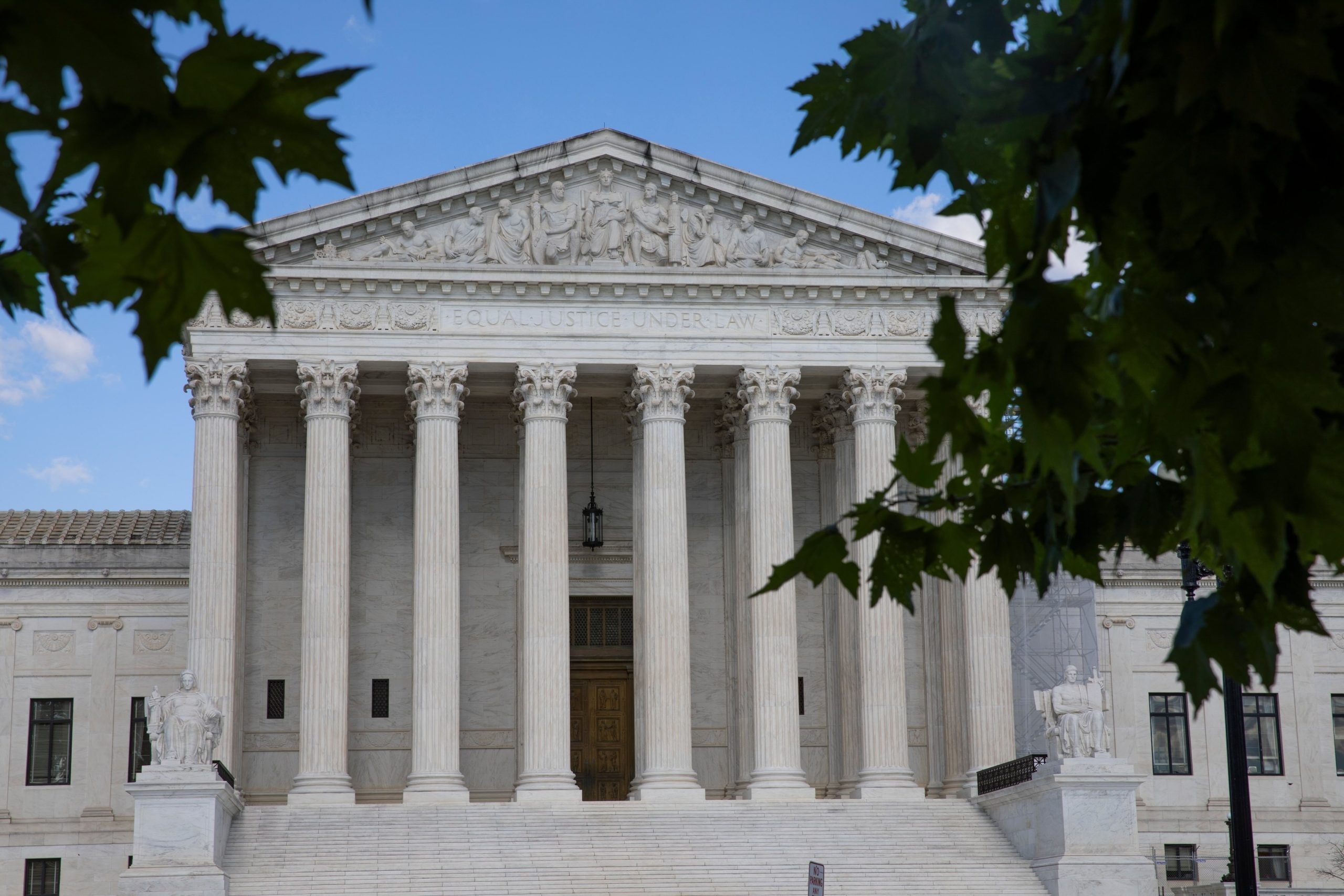
The court could rule in Office of Personnel Management v. American Federation of Government Employees at any time. (Aashish Kiphayet via Shutterstock)
A group of nonprofits challenging the layoffs of thousands of probationary employees urged the Supreme Court to leave in place an order by a federal judge in San Francisco that would require the federal government to reinstate more than 16,000 employees who were fired by six agencies in February. “It strains credulity that returning employees to work would cause irreparable harm to the Government,†the group said in a 40-page filing, “when these employees had the same workplaces, credentials, benefits, and training just a few weeks ago.â€
In the federal government, probationary employees are those who have been newly hired for a position, normally within the past year. Not all probationary employees are new to the federal government or the workforce, however; the term also applies to experienced federal employees who transfer to a new role. In February, the Trump administration fired tens of thousands of probationary employees as part of its broader effort to shrink the size of the federal workforce.
The nonprofits that contend that layoffs could lead to fewer government services, affecting their members, went to federal court on Feb. 19, arguing that the Office of Personnel Management’s actions violated several different provisions of the federal law governing administrative agencies.
The government insisted that OPM had not been responsible for any of the firings. But Senior U.S. District Judge William Alsup concluded, based on a “mountain of evidence,†that “OPM directed other agencies to fire their probationary employees†under false pretenses – with the agencies citing poor performance but with OPM telling the agencies themselves that performance ratings did not matter in determining who should be fired.
At a hearing on March 13, Alsup issued a preliminary injunction that ordered OPM and six agencies – the Departments of Veterans Affairs, Agriculture, Defense, Energy, Interior, and the Treasury – to immediately reinstate the probationary employees who had been fired.
The U.S. Court of Appeals for the 9th Circuit fast-tracked the government’s appeal, setting a briefing schedule that requires the government to file its opening brief on April 10, but declined to pause Alsup’s order while that appeal plays out.
Acting Solicitor General Sarah Harris went to the Supreme Court on March 25, asking the justices to intervene. Alsup’s ruling, she contended, allows “third parties†like the groups in this case to “highjack the employment relationship between the federal government and its workforce.â€
In their filing on Thursday, the groups counter that the government is wrong when it contends that the groups lack a legal right to sue, known as standing, to challenge the firings of probationary employees. For example, they note, the termination of probationary employees who worked for the Department of Veterans Affairs “has already had and will imminently continue to have serious negative consequences†for members of the veterans’ non-profit in the case.
Nor is the government correct, the groups continue, when that it contends that “no one can challenge the illegal mass firing of federal employees by OPM, because the only way to challenge termination of federal employees is†for each individual employee to go to the Merit Systems Protection Board.
And Alsup did not go beyond his power, the groups say, when he ordered the government to reinstate fired employees. Instead, he merely “restored the status quo that existed prior to OPM’s illegal conduct, and reinstatement is a routine remedy in the fact of illegal termination.â€
A federal district court in Maryland also issued an order that temporarily stopped the firings, and required the reinstatement, of probationary employees at 20 different federal agencies who live and work in the 19 states (along with the District of Columbia) that brought the case.
The U.S. Court of Appeals for the 4th Circuit rejected the government’s request to put that order on hold. The government’s efforts to comply with the district court’s order in this case, the groups suggest, establish that any burden on the government from complying with Alsup’s order to reinstate the fired probationary employees is not insurmountable.
This article was originally published at Howe on the Court.Â