

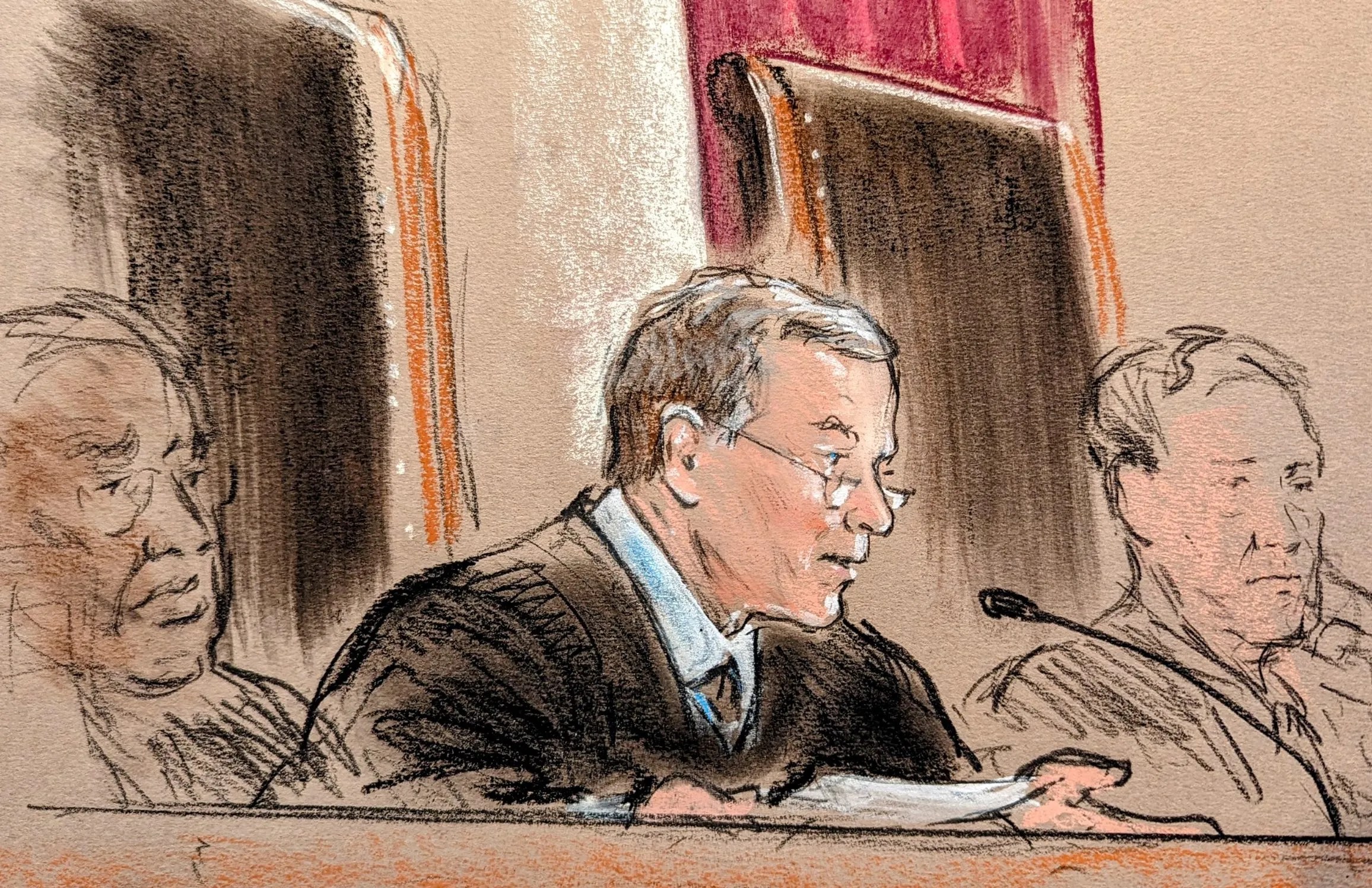
On Saturday, one day after the Supreme Court handed down some of its most anticipated decisions of the 2024-25 term, Chief Justice John Roberts was in Charlotte, North Carolina, answering questions about judicial power and independence at a conference for the judges of the U.S. Court of Appeals for the 4th Circuit, as well as the lawyers who practice in that area.
Although Roberts’ interlocutor, 4th Circuit Chief Judge Albert Diaz, didn’t ask him directly about Friday’s rulings on nationwide injunctions, parental rights, and access to online pornography, Diaz did prompt the chief justice to share how much he thinks about the consequences of significant rulings as they’re being written.
His answer? Not that much.
Roberts said it’s not his job to decide what the result should be and then work backwards from it. Instead, a judge’s job is “to do the legal analysis to the best you can.â€
“Sometimes the result is certainly not maybe one you would have liked and maybe it’s one that seems pretty surprising, but you do have to keep in mind it’s not your job to decide what the right result should look like,†he said.
You should revisit your starting suppositions if they lead to “some extraordinarily improbable result,†he added, but you shouldn’t “start by saying if this comes out this way this thing is going to happen and that’s a bad thing as opposed to that.â€
That response was among the most memorable offered by Roberts during the around 30-minute conversation, and it built on comments he made about facing criticism, including from colleagues.
As a judge, you must learn to expect and accept pushback from the losing side and stay focused on your legal analysis, not the criticism, Roberts said.
“What they’re angry about or upset about is probably not that you applied the principle. … It’s that they lost whatever they were looking for,†he said.
Criticism becomes problematic when it mischaracterizes the role of the courts. One way to stem the rise of threats of violence against judges may be to remind people that the role of the judiciary is to “interpret the law to the best of our ability,†not to write the laws, Roberts said.
“The idea that we’re responsible for whatever somebody is angry about — it just doesn’t make any sense, and it’s very dangerous†to our system of government, he said.
Reflecting on the “sharp†words that his Supreme Court colleagues sometimes exchange when issuing opinions at the end of a term, Roberts noted that those words distract from the true nature of the court’s work.
If a justice is doing the job well, then his or her opinions are shaped by the justices in dissent, not just by the justices in the majority. Â
“At the end of the term where we’re often issuing opinions where there’s a lot of sharp division and some sharp adjectives employed, you lose sight of the fact that that’s a culmination of a process where people are sitting down, they’re getting information from the lawyers, they’re getting information from the briefs, but they’re also getting a lot of perspective from their colleagues, and I know, to a person, working hard to understand what somebody on the other side of an issue is thinking and looking to see if there’s some way to — if not bring things together — make the resolution as helpful as possible,†Roberts said.
Near the end of the conversation, Roberts offered additional insight into his relationships with his colleagues when asked about how the Supreme Court is addressing cybersecurity issues, including ones caused by artificial intelligence.
He said Justice Clarence Thomas is “the most technologically sophisticated of the justices†and helps keep everyone aware of potential threats.
“I do what he tells me to do,†Roberts said.
Diaz wrapped up the conversation by asking Roberts to reflect on work-life balance and share how he unwinds during his limited downtime.
“I like to read a lot, but … it’s all usually crime mysteries and things like that, nothing elevating in any way other than you want to find out who did it,†Roberts said.
Posted in What’s Happening Now
Recommended Citation:
Kelsey Dallas,
Memorable moments from Chief Justice John Roberts’ remarks to 4th Circuit judges,
SCOTUSblog (Jun. 30, 2025, 2:49 PM),
https://www.scotusblog.com/2025/06/memorable-moments-from-chief-justice-john-roberts-remarks-to-4th-circuit-judges/