

Major Questions is a recurring series by Adam White, which analyzes the court’s approach to administrative law, agencies, and the lower courts.
Please note that the views of outside contributors do not reflect the official opinions of SCOTUSblog or its staff.
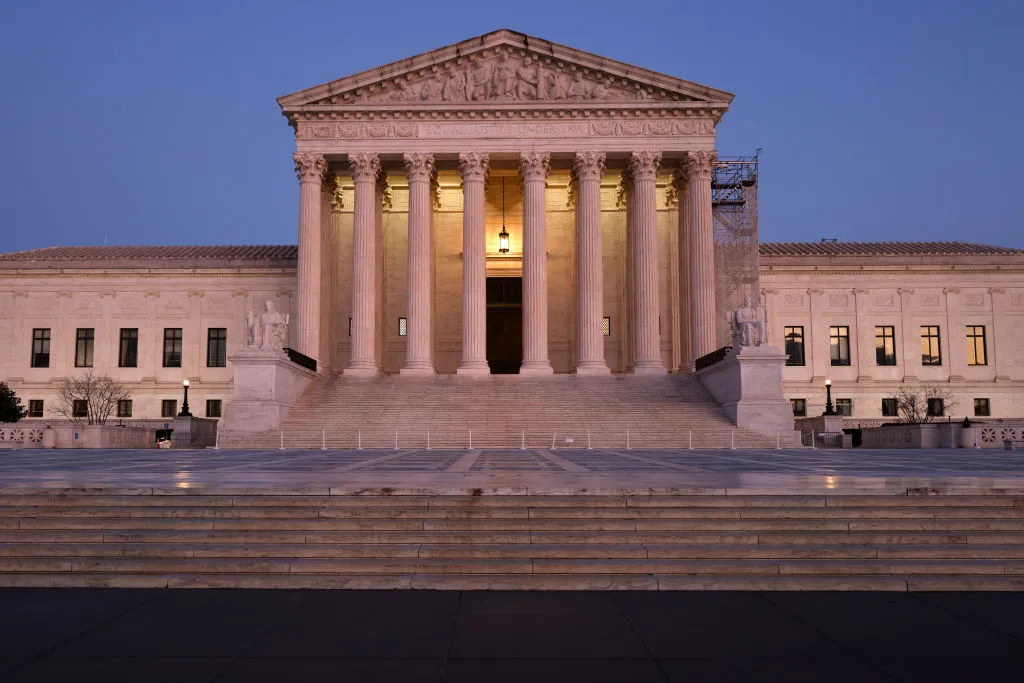
Last week, the Supreme Court took up Trump v. Slaughter, on whether presidents have constitutional power to fire the heads of the Federal Trade Commission without cause. The case centers on the court’s 1936 decision in Humphrey’s Executor v. United States, a landmark precedent allowing Congress to insulate certain agency heads against full presidential control.
Will Humphrey’s Executor be overturned? So far, that has been the conventional narrative around the Slaughter case. But the situation is much more nuanced, because Humphrey’s Executor itself was more nuanced.
To be sure, the court does seem likely to uphold President Donald Trump’s firing of FTC commissioner Rebecca Kelly Slaughter. But this would not require the court to overturn Humphrey. Rather, Humphrey’s own analysis might spell doom for the FTC’s independence, for reasons that the court has signaled in several opinions over the last decade.
Before delving into this, we should pause to at least concede the irony of it all. Humphrey’s Executor was, itself, a case about the FTC’s independence.
In 1933, President Franklin Delano Roosevelt asked FTC Commissioner William Humphrey, a Herbert Hoover appointee, to resign from office five years before his term expired. FDR didn’t offer a specific reason; his letter mused that “I do not feel that your mind and my mind go along together on either the policies or the administering of the Federal Trade Commission, and, frankly, I think it is best for the people of this country that I should have a full confidence.†Humphrey declined to resign, so FDR simply fired him.
FDR made no pretense of complying with the Federal Trade Commission Act, which provided (and still provides) that FTC Commissioners could be fired only for “inefficiency, neglect of duty, or malfeasance in office.†Instead, FDR’s administration argued – relying on the 1925 case of Myers v. United States – that the president’s constitutional responsibilities empowered him to fire FTC commissioners at will, regardless of the statute.
The court rejected this argument, with language that became the jurisprudential bedrock undergirding modern “independent†agencies. Distinguishing the FTC from agencies that simply wield “executive†powers (which must be subject to presidential control), the court held that the FTC’s “duties are neither political nor executive, but predominantly quasi-judicial and quasi-legislative.†Its members, the court explained, are “called upon to exercise the trained judgment of a body of experts ‘appointed by law and informed by experience.’â€
From the start, FDR’s New Dealers lampooned these distinctions – “Roosevelt had followed what was thought to be a rule clearly set forth by the Supreme Court in the Myers case,†Arthur Schlesinger Jr. wrote in his hagiography of the New Deal, with critics charging that Humphrey’s Executor was marked mainly by a “sting of personal animus†against FDR himself. So, too, do modern advocates for presidential power over agency heads – Justice Antonin Scalia explicitly invoked the New Dealers’ criticisms in his own seminal Morrison v. Olson dissent, observing that Humphrey’s Executor “was considered by many at the time the product of an activist, anti-New Deal Court bent on reducing the power of President Franklin Rooseveltâ€.
In recent years, however, the justices and scholars have focused not simply on the general holding in Humphrey’s, but on its specific legal framework and how it applied that framework to the facts at hand.
The key case for this is 2020’s Seila Law v. CFPB, in which the court held that the Consumer Financial Protection Bureau did not meet the Humphrey’s standard for agency independence. The court observed in a footnote that the Humphrey’s opinion might not have accurately apprised the FTC’s actual powers in 1935. “Perhaps the FTC possessed broader rulemaking, enforcement, and adjudicatory powers than the Humphrey’s Court appreciated,†Chief Justice John Roberts wrote for the majority. “Perhaps not.â€
But more importantly, the court emphasized, applying Humphrey’s Executor today requires a court to look specifically at the actual powers wielded by a given agency. Hence the court’s rejection of CFPB independence in Seila Law.
“Unlike the New Deal-era FTC upheld there,†the Seila Court wrote, “the CFPB is led by a single Director who cannot be described as a ‘body of experts’ and cannot be considered ‘non-partisan’ in the same sense as a group of officials drawn from both sides of the aisle.†Moreover, the court added, the CFPB’s lack of a multi-member board with staggered terms “guarantee[s] abrupt shifts in agency leadership and with it the loss of accumulated expertise.â€
Finally, the court explained, “the CFPB Director is hardly a mere legislative or judicial aid.†Instead of simply making reports and recommendations to Congress, “as the 1935 FTC did,†the CFPB Director can make binding regulations of his own; instead of recommending case-specific decisions to Article III courts, “the Director may unilaterally issue final decisions awarding legal and equitable relief in administrative adjudications.â€
And the CFPB Director’s “enforcement authority includes the power to seek daunting monetary penalties against private parties on behalf of the United States in federal court—a quintessentially executive power not considered in Humphrey’s Executor.â€
In short, the Roberts Court took Humphrey’s Executor not just seriously but literally: rather than taking the case as a general endorsement of all independent agencies old and new, the court applied Humphrey’s specific analysis to a new agency’s specific powers.
I expect the court to take the same approach to the Federal Trade Commission’s independence in Trump v. Slaughter.
The last nine decades have brought significant changes to the FTC from the time of Humphrey’s Executor, in terms of both its formal powers and its increasingly energetic – even ideological or partisan – approach to wielding them. As Professor Daniel Crane and antitrust lawyer Eli Nachmany have both documented in recent scholarship, the FTC’s powers now include much more rulemaking and enforcement authority than in 1935.
To be sure, the modern FTC still has the bipartisan multi-member structure that the CFPB lacked, and in that respect, it comes closer to Humphrey’s Executor than the CFPB did.
But, as Professor Crane explains, the modern FTC “has been anything but a non-partisan and independent agency in fact,†and its leaders can lay less and less claim to have been appointed for dispassionate, neutral “expertise.†He points out that “FTC Commissioners have not been leading experts in their fields when appointed and have not stayed at the Commission long enough to acquire expertise.†Recent historical experience only makes the point more obvious.
In the last administration, for example, President Biden made the FTC a centerpiece in his own whole-of-government approach to overhauling antitrust policy along new political lines, exemplified by his lengthy landmark Executive Order 14036 on “Promoting Competition in the American Economy.†(I have written elsewhere, at length, on Chairwoman Lina Khan and the Biden administration’s efforts to transform the FTC along new ideological lines.)
And while President Trump repealed that particular executive order, many lawyers and commentators have seen significant continuities in the Trump administration’s own version of a populist antitrust policy.
Perhaps most importantly, as Crane documents in detail, today’s FTC “is neither primarily legislative nor adjudicatory, but instead acts primarily as an executive law enforcement agency.†Its regulatory activities have expanded substantially since 1935, new legislation has codified its rulemaking powers, and its adjudicative powers have receded. Given those major changes, Crane concludes that “Seila Law’s recitation of the Humphrey’s Executor view of the FTC—that it ‘performed legislative and judicial functions and was said not to exercise any executive power’—bears zero resemblance to the actual FTC.â€
So the key question remains: Will the court agree, too? As I noted above, the court seems likely to uphold Trump’s firing of Slaughter. The clearest indication came in the court’s brief order a few months ago in Trump v. Wilcox, when the court stayed lower court orders blocking Trump from firing members of the National Labor Relations Board and Merit Systems Protection Board. In its brief opinion, the court noted that “[t]he stay reflects our judgment that the Government is likely to show that both the NLRB and MSPB exercise considerable executive power.†The NLRB’s own powers – again, largely enforcement-centric, and increasingly partisan or ideological – strike me as very close to the FTC’s. (I unpacked the court’s Wilcox opinion in my previous column on the Federal Reserve’s own independence.)
But this need not entail completely renouncing Humphrey’s Executor, which I believe the court is unlikely to do, given Trump’s threats against the Federal Reserve’s own independence looming in the background.
The court already emphasized (in Wilcox) that it sees the Federal Reserve as fundamentally different from other independent regulatory agencies due to the Fed’s different structure and history. And, as I noted in my previous column, the Fed’s most important powers – its monetary power, and its supervision of the Federal Reserve Banks – are vastly different than normal regulatory agencies’ powers. As I wrote last time, the Fed’s powers seem to fit comfortably within the Humphrey’s Executor framework, more so than any other modern independent regulatory agency.
If the court were to categorically renounce Humphrey’s Executor, it would raise the very questions and fears that the court sought to avoid in the Wilcox order. At the very least, a Slaughter decision that renounces Humphrey’s Executor would restate a new framework for agency independence that clearly distinguishes between agencies that primarily wield “executive†powers and those that do not, thus preserving the constitutionality of our independent Federal Reserve Board of Governors.
Finally, the court’s brief order taking up Slaughter’s case would itself appear to distinguish Slaughter’s fortunes from Humphrey’s Executor. The Justice Department’s initial brief asked the court to take up a very broad question: “whether 15 U.S.C. 41 [the Federal Trade Commission Act] violates the separation of powers by prohibiting the President from removing a member of the Federal Trade Commission except for ‘inefficiency, neglect of duty, or malfeasance in office.’†Slaughter agreed that the court should grant review on that question. But the court’s order rephrased the question carefully: “Whether the statutory removal protections for members of the Federal Trade Commission violate the separation of powers and, if so, whether Humphrey’s Executor v. United States …  should be overruled.†In posing the question as such, the court explicitly separated the constitutionality of Slaughter’s firing from the constitutionality of Humphrey’s framework.
Perhaps the court will recalibrate the Humphrey’s Executor framework, leaving us to cite a new Slaughter rule going forward. But when the court issues its decision, I will expect to see, at most, a “mend it, don’t end it†approach to Humphrey’s Executor.
Posted in Major Questions, Recurring Columns