

SCOTUS NEWS
on Dec 31, 2024
at 6:16 pm
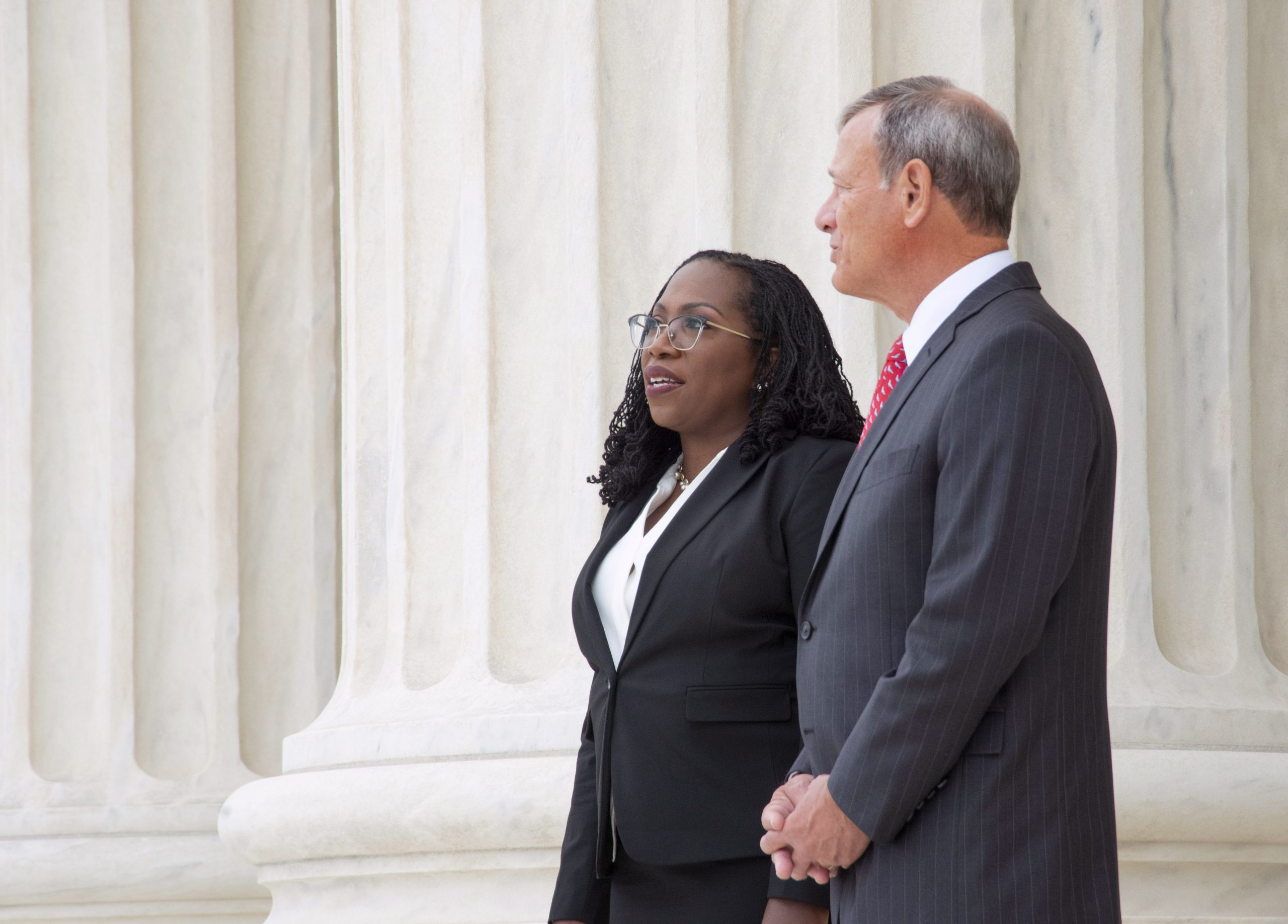
Chief Justice John Roberts released his annual report on Tuesday. (Collection of the Supreme Court of the United States)
At the end of an eventful year at the Supreme Court that included a ruling giving former President Donald Trump broad immunity from criminal prosecution for his conduct while in office, reporting that controversial flags had flown at the homes of Justice Samuel Alito, and an ethics inquiry from Senate Democrats that found more gift trips that Justice Clarence Thomas had failed to disclose, Chief Justice John Roberts’ annual report, released on Tuesday evening, focused on what he sees as the threats to judicial independence.
One of those threats, Roberts wrote, is disinformation from abroad fomented by foreign countries. Although Roberts did not mention any of the “hostile foreign state actors†responsible for such disinformation by name, the justices will hear oral arguments next week in a challenge to a federal law that would require social media giant TikTok to shut down in the United States unless its parent company can sell it off by Jan. 19. A federal appeals court upheld the law earlier this month, calling it part of “a broader effort to counter a well-substantiated national security threat posed by the People’s Republic of China.†Roberts’ discussion of disinformation in his report seemed to suggest that he may be sympathetic to the TikTok ban.
The chief justice traditionally releases his year-end report on the federal judiciary every year on New Year’s Eve. Roberts’s 2023 report discussed the legal profession and the role of artificial intelligence. His 2022 report, in the aftermath of the court’s decision overturning the constitutional right to abortion, stressed the importance of judicial security.
This year’s report comes in the wake of mounting criticism of the court and the justices’ decision in June overturning the longstanding Chevron doctrine, which instructed courts to generally defer to a federal agency’s interpretation of the statutes that it administers. Quoting his predecessor, the late Chief Justice William Rehnquist, Roberts characterized the United States’s independent federal judiciary as “one of the ‘crown jewels of our system of government†– and essential to the rule of law.
But “four areas of illegitimate activity†pose a danger to that independence, Roberts wrote on Tuesday. There has “been a significant uptick in†threats directed at judges, he noted, requiring the commitment of “significant additional resources†to protect judges and investigate and prosecute threats against them.
A bill passed earlier this month to avert a government shutdown included more than $25 million in funding for security at the justices’ homes. A California man, Nicholas Roske, is scheduled to stand trial in Maryland next year on charges that he attempted to assassinate Justice Brett Kavanaugh in 2022.
Efforts to intimidate judges – whether by “activist groups†or public officials – can undermine independence, Roberts continued. Roberts cautioned that critics of the judiciary “should be mindful that intemperance in their statements when it comes to judges may prompt dangerous reactions by others.â€
Roberts also cited disinformation as a threat to judicial independence, observing that “distortion of the factual or legal basis for a ruling can undermine confidence in the court system.†The judicial branch, Roberts added, “is peculiarly ill-suited to combat this problem, because judges typically speak only through their decisions.†(The Supreme Court does not make audio of its opinion announcements, at which the justices normally read summaries of their written opinions, available for several months after the opinions are released.)
Roberts pointed to the influence of “hostile foreign state actors†as another part of that potential threat. Such actors, he said, could “feed false information into the marketplace of ideas†or “steal information.†Defending the TikTok ban, the Biden administration told the court on Dec. 27 that TikTok “collects vast swaths of data about tens of millions of Americans, which†China “could use for espionage or blackmail,†and that China could “covertly manipulate the platform to advance its geopolitical interests and harm the United States — by, for example, sowing discord and disinformation during a crisis.â€
Finally, Roberts concluded, “judicial independence is undermined unless the other branches are firm in their responsibility to enforce the court’s decrees.†Roberts harkened back to the 1950s and 1960s, when federal judges and the Eisenhower and Kennedy administrations stood together when state governors tried to defy court orders to desegregate schools. Since then, he said, the United States has “avoided the standoffs,†but recently “elected officials from across the political spectrum have raised the specter of open disregard for federal court rulings. These dangerous suggestions, however sporadic, must be rejected,†he wrote.
The Supreme Court will be back in the spotlight early in the new year, when it hears arguments on Jan. 10 in the TikTok case.Â
This article was originally published at Howe on the Court.Â