

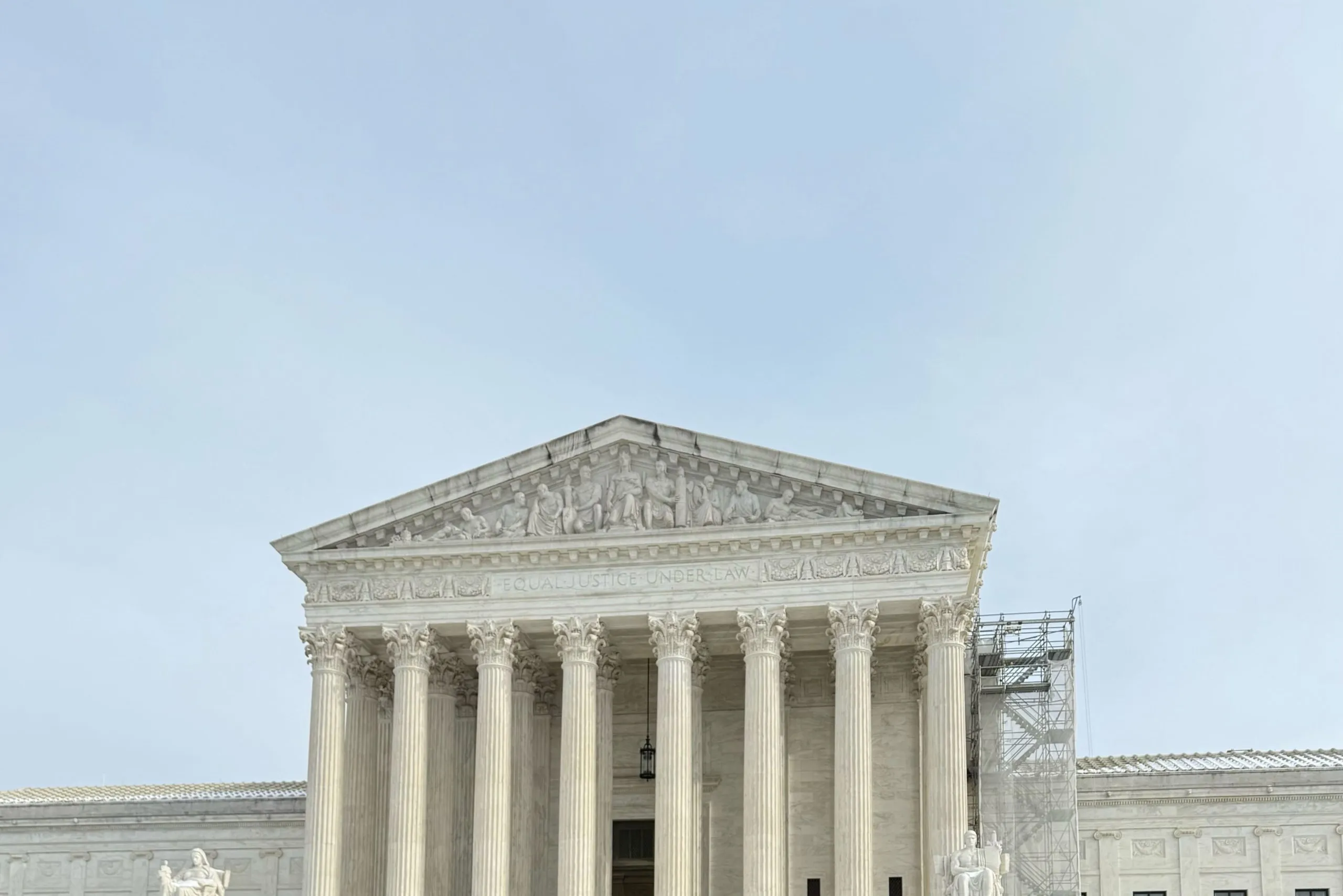
The Supreme Court will not decide right now whether Louisiana violated the Constitution when it enacted a congressional map last year that created a second majority-Black district. In a surprise order on Friday, the justices announced that they will hear new arguments in the case sometime during the court’s 2025-26 term – likely in the fall. The justices did not provide any reasoning for their decision not to resolve the dispute before their summer recess, instead indicating only that they would “issue an order scheduling argument and specifying any additional questions to be addressed in supplemental briefing†“[i]n due course.â€Â
Justice Clarence Thomas dissented from the court’s decision, writing that the court has “an obligation to resolve such challenges promptly†and that he “see[s] no reason to avoid deciding these cases now.â€Â
Friday’s order was the latest chapter in a long-running dispute over Louisiana’s congressional map. In response to the 2020 census, the state’s legislature in 2022 adopted a congressional map that included only one majority-Black district out of the six allotted to the state, even though roughly one-third of the state’s population is Black.
A group of Black voters went to federal court, where they argued that the 2022 map violated Section 2 of the federal Voting Rights Act, which prohibits election practices that result in a denial or abridgement of the right to vote based on race, because it diluted the votes of Black residents. Â
A federal district court threw out the 2022 map. It agreed with the voters that the map likely violated Section 2, and, for that reason, barred the state from using the map for congressional elections and instructed it to draw a new map with a second majority-Black district.Â
The U.S. Court of Appeals for the 5th Circuit upheld that ruling and ordered Louisiana to draw a new map by Jan. 15, 2024, or face the prospect of a trial, after which the district court could adopt a new map for the 2024 elections.Â
In response, the Louisiana legislature enacted a new map. That map, known as S.B. 8, created a second majority-Black district – the 6th District – that stretches across Louisiana from Baton Rouge, in the southeast corner of the state, to Shreveport, in the northwest corner.Â
The adoption of S.B. 8 led to the lawsuit in this case, brought by a group of voters who describe themselves as “non-African American.†They contended that the map was an unconstitutional racial gerrymander – that is, it sorted voters based primarily on their race. A three-judge federal court agreed and barred the state from using the map in upcoming elections.Â
The Supreme Court last year put the lower court’s decision on hold, which allowed Louisiana to use the new map during the 2024 elections. Rep. Cleo Fields, who had been a member of Congress for two terms during the 1990s until his district was redrawn, was elected to represent the 6th District.Â
Both the state and the Black voters who had challenged the 2022 map appealed the three-judge district court’s ruling to the Supreme Court, which heard oral arguments in the case in March. Now it appears that the justices will hear oral arguments once again in the fall, with a decision likely to follow sometime in 2026.Â
Cases: Louisiana v. Callais
Recommended Citation:
Amy Howe,
Supreme Court punts decision on Louisiana’s congressional map to next term,
SCOTUSblog (Jun. 27, 2025, 6:33 PM),
https://www.scotusblog.com/2025/06/supreme-court-punts-decision-on-louisianas-congressional-map-to-next-term/