


[ad_1]
OPINION ANALYSIS
on Mar 26, 2025
at 11:50 am
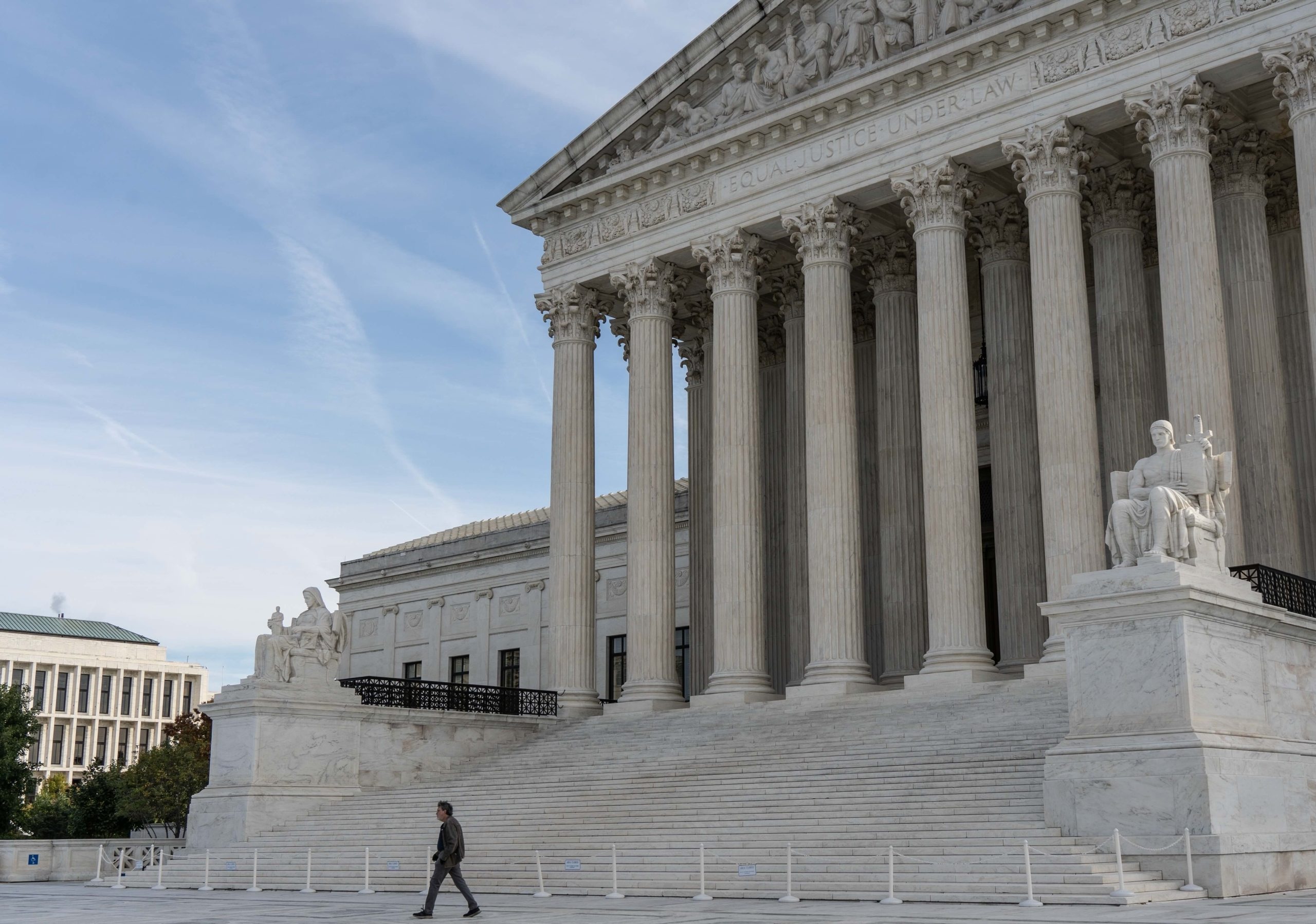
The court heard Bondi v. VanDerStok at the start of the term in October. (Amy Lutz via Shutterstock)
This article was update on March 26 at 2:04 p.m.
The Supreme Court on Wednesday upheld a Biden-era rule regulating so-called “ghost guns†– untraceable weapons without serial numbers, assembled from components or kits that can be bought online. By a vote of 7-2, the justices held that the Gun Control Act of 1968 allows the Bureau of Alcohol, Tobacco, Firearms, and Explosives to regulate at least some ghost guns, although they left open the possibility that the rule might not apply in individual challenges to particular ghost guns.
Justice Clarence Thomas dissented from the court’s decision, complaining that it had agreed to “rewrite statutory text.†Justice Samuel Alito wrote his own dissent in which he contended that his colleagues had applied the wrong test to determine whether the ATF rule was valid.
The ATF adopted the rule in 2022 to address what it characterizes as an “exponential†increase in ghost guns. The Gun Control Act defines a “firearm†as “any weapon … which will or is designed to or may readily be converted to expel a projectile by the action of an explosive,†including “the frame or receiver of any such weapon.â€
The ATF contended that the 2022 rule was consistent with the language of the law because it defines “firearm†to include products, such as gun kits, that can be converted into an operational gun or a functional frame (the basic structure of the gun) or receiver (the part of the gun that houses the firing mechanism). The rule also clarified that the terms “frame†and “receiver†include partially complete or disassembled frames or receivers that can be “readily†completed or converted to work as a frame or receiver.
But a group that included two individual gun owners and a gun-rights advocacy group went to federal court in Texas to challenge the rule. A federal district judge in Fort Worth prohibited the agency from applying the rule anywhere in the United States.
Although the conservative U.S. Court of Appeals for the 5th Circuit largely upheld that decision, a divided Supreme Court put the district judge’s order on hold, allowing the Biden administration to enforce the rule while it appealed. Four justices – Clarence Thomas, Samuel Alito, Neil Gorsuch, and Brett Kavanaugh – indicated that they would have denied the government’s request then.
In a 24-page opinion by Gorsuch on Wednesday, the court upheld the rule.
Congress enacted the Gun Control Act, Gorsuch explained, because it found that then-current “gun control measures … allowed criminals to acquire largely untraceable guns too easily.†The act requires manufacturers to put a serial number on guns and regulates commercial gun sales by (among other things) requiring gun manufacturers and dealers to conduct background checks and keep records of gun sales.
Advances in technology, Gorsuch noted, such as 3D printing and reinforced polymers, have changed the way in which guns are manufactured and sold. And in particular, “companies are able to make and sell weapon parts kits that individuals can assemble into functional firearms in their own homes.†These kits are popular among hobbyists, Gorsuch wrote, but also among criminals, because some manufacturers and sellers do not regard them as “firearms†subject to the Gun Control Act and therefore do not comply with the act’s requirements – leading to “an explosion of crimes†around the country.
Gorsuch emphasized that the challengers in this case were not asking the Supreme Court to decide whether the rule regulating ghost guns could be applied to specific kinds of ghost guns – that is, to “particular weapons parts kits or unfinished frames or receivers.†Instead, he stressed, the challengers had asked the courts to hold that the rule could not be applied to any ghost guns. But the Supreme Court declined to do so.
First, Gorsuch explained, the Gun Control Act allows the ATF to regulate weapons parts kits. The text of the act, he reasoned, imposes two criteria. First, there must be a “weapon.†And the “weapon†must “be able to expel a projectile by the action of an explosive,†be “designed to do so,†or be “susceptible of ready conversion to operate that way.â€
In contrast with the 5th Circuit, Gorsuch concluded that “at least some kits will satisfy both†of these requirements. He used as an example a kit named the “Buy Build Shoot†kit, by a company called Polymer80, that allows the buyer to quickly and easily build a “Glock-variant semiautomatic pistol.†An “ordinary speaker might well describe the ‘Buy Build Shoot’ kit as a ‘weapon,’†Gorsuch posited, even if “perhaps a half hour of work is required before anyone can fire a shot.†He noted that “even as sold, the kit comes with all necessary components, and its intended function as instrument of combat is obvious. Really, the kit’s name says it all: ‘Buy Build Shoot.’†Â
And the “Buy Build Shoot†kit also meets the second criterion, because it can be “readily converted†into a firearm, “for it requires no more time, effort, expertise, or specialized tools to complete†than a starter gun, which is explicitly mentioned in the Gun Control Act.
Gorsuch acknowledged that “[w]eapons parts kits vary widely†and “may require more time, expertise, or specialized tools to finish.†But the Supreme Court does not need to decide in this case when “a kit may be so incomplete or cumbersome to assemble that†the ATF can no longer regulate it under the Gun Control Act, he determined.
Gorsuch concluded, again in contrast to the 5th Circuit, that the Gun Control Act also allows the ATF to regulate partially finished frames and receivers. Gorsuch’s opinion offered a picture of a “complete frame of a Glock-variant firearm†above a picture of a “partially complete frame†sold by Polymer80, highlighting what he described as the “main differences†between the two – a pair of plastic tabs that the buyer would need to remove, and then add pins. Here too he observed that “an ordinary speaker might well call Polymer80’s product a firearm ‘frame’ even though a little work is required to complete. Just look again at the second photo,†Gorsuch pleaded. “What else would you call it?â€
Gorsuch added that the ATF has in the past “consistently interpreted†the Gun Control Act to apply to at least some unfinished frames and receivers, “including ones no more finished than Polymer80’s product.†These “contemporary and consistent views†“can provide evidence of the law’s meaning,†he noted. And indeed, he continued, the challengers say that that they do not dispute the ATF’s “prior practice†– “a concession that all but gives the game away.†Although the challengers contend that the new rule regulating “ghost guns†goes too far, he said, “for our purposes, what matters is that even the plaintiffs do not really insist that†the rule “reaches only finished frames and receivers.â€
As with weapons parts kits, Gorsuch conceded that the court’s “reasoning has its limits.†“Some products,†he wrote, “may be so far from a finished frame or receiver that they cannot fairly be described using those terms. But this case,†he wrote, “requires us to explore none of that.â€
Gorsuch rejected the challengers’ request to rule in their favor based on either the rule of lenity – the idea that when a criminal law is ambiguous, it should be applied in the way that is most favorable to the defendant – or the doctrine of constitutional avoidance, which instructs courts to avoid ruling on constitutional issues unless it is absolutely necessary. Gorsuch, perhaps the court’s strongest advocate for the rule of lenity, countered that “neither lenity nor avoidance has any role to play where ‘text, context, and structure’ decide the case.†“The Gun Control Act embraces,†Gorsuch concluded, and thus permits ATF to regulate, some weapons parts kits and unfinished frames or receivers, including those we have discussed.â€
Justice Brett Kavanaugh wrote a two-page concurring opinion in which he observed that the line between ghost guns to which the ATF’s rule (and therefore the requirements of the Gun Control Act, such as background checks, licensing, and serial numbers) does or does not apply “is not entirely clear.†Individuals can face criminal liability for violating most of those requirements only if the government can show that they knew their conduct was illegal, Kavanaugh noted – a high bar.
But someone who violates the background-check requirement, Kavanaugh continued, is subject to a lower standard, and can face criminal liability even if they were unaware that they were violating the law. Kavanaugh suggested that the federal government would avoid the potential fairness problems that could arise in such a situation “by adhering to its oral-argument representation that it would likely decline to bring charges in those circumstances.â€
Justice Sonia Sotomayor was less concerned about the issues that Kavanaugh raised, deeming them “unfounded†in her own two-page concurring opinion. Firearms manufacturers and dealers have long complied with the Gun Control Act’s requirements, she wrote, and “ATF’s rule should come as no surprise.†But to the extent that manufacturers aren’t sure about whether the rule applies to their products, she contended, the ATF “encourages†them to seek guidance from the agency. “Manufacturers have long taken advantage of that process,†she added, “and a failure to do so might suggest willfulness on their part.â€
Thomas would have held that the ATF rule was not authorized by the Gun Control Act. In his view, the “ordinary meaning of ‘frame or receiver’ does not include†unfinished frames or receivers. Similarly, although “an object that ‘may readily be converted’ into a gun qualifies as a ‘firearm’ if that object is already a ‘weapon,’ an object that is not already a weapon does not.†And here, he said, the “ordinary meaning of ‘weapon’ does not include weapons-parts kits,†which are “unfinished†and “inoperable.†But at the very least, Thomas continued, the Gun Control Act is ambiguous, which would call for the application of the rule of lenity. Â
“Congress,†Thomas concluded, “could have authorized ATF to regulate any part of a firearm or any object readily convertible into one. But, it did not. I would adhere to the words Congress enacted.â€
Alito disagreed with the majority’s decision to use the same test that courts use when reviewing challenges to the constitutionality of laws as they are written, without regard to particular facts. The challengers in this case, he contended, had not agreed that such a test should apply, and the federal government gave it only “cursory treatment†in its brief.
Alito also questioned whether the test, known as the Salerno test, should apply. In the court’s decision last July sending First Amendment challenges to Florida and Texas laws regulating large internet platforms back to the lower courts for another look, Alito explained, he wrote that one important reason to use the Salerno test “is respect for the lawmaking authority of the legislative body that enacted the law in question.†But that “threat to legislative authority is not present when a regulation is challenged,†he noted. He therefore would have either instructed the litigants in the case to brief this issue or send the case back to the lower court for it to consider it.
This article was originally published at Howe on the Court.Â
[ad_2]
Source link