

[ad_1]
OPINION ANALYSIS
on Mar 21, 2025
at 11:40 am
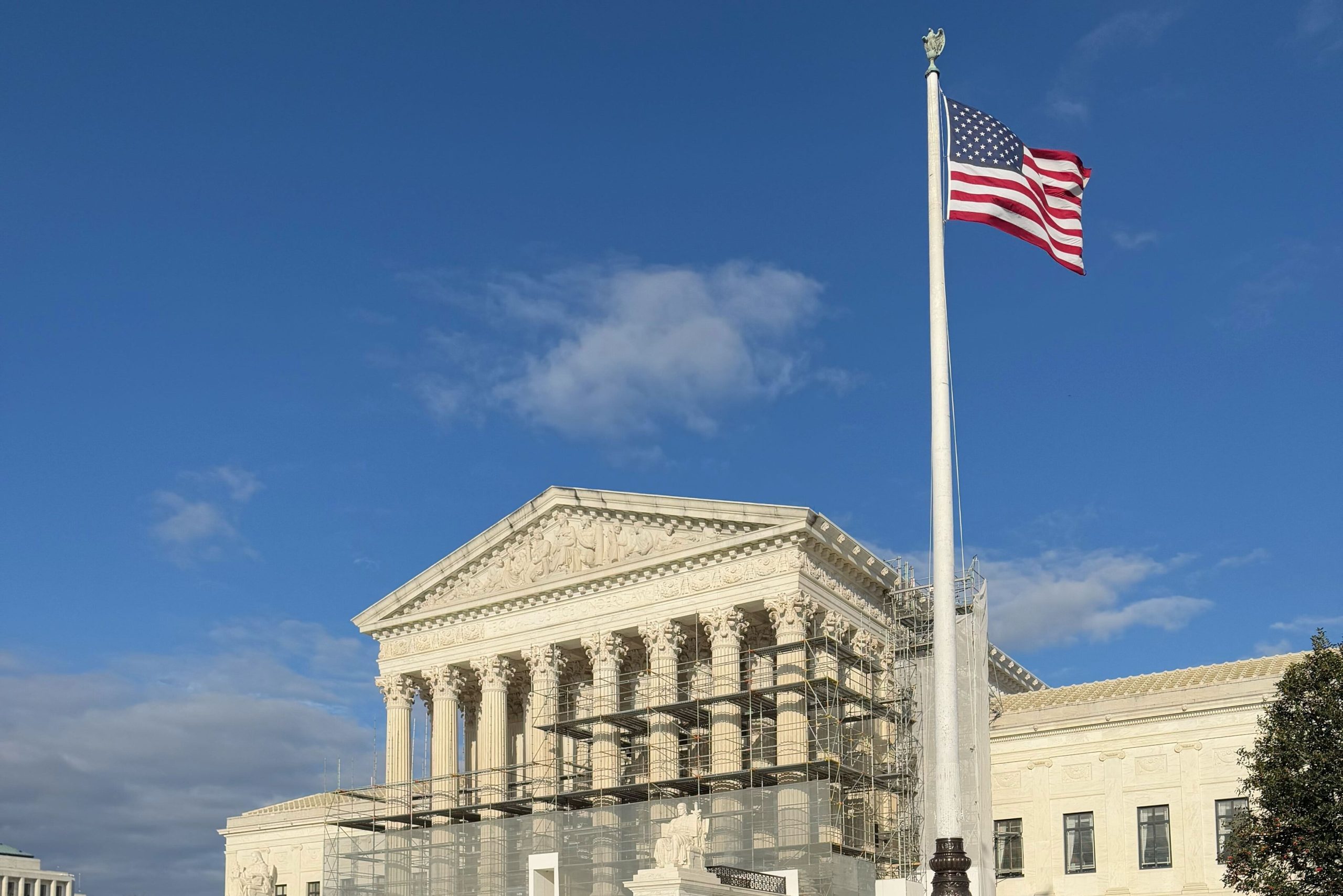
The justices hear Thompson v. United States in January. (Katie Barlow)
The Supreme Court on Friday threw out a ruling by a federal appeals court in Chicago that upheld the conviction of Patrick Daley Thompson, who served four months in a federal prison for making false statements to bank regulators about loans that he took out but did not repay.
In a unanimous opinion by Chief Justice John Roberts, the justices agreed with Thompson, the grandson and nephew of two former Chicago mayors and himself a former city alderman, that the federal law under which he was convicted does not apply to statements that are misleading but not false. But Friday’s decision left open the possibility that when the case returns to the lower courts, Thompson’s conviction could nonetheless stand because his statements were false.
Friday’s ruling was the most recent of a series of rulings over the past several years in which the court has pushed back against a broader reading of federal criminal laws by prosecutors.
The case centers on statements that Thompson made to a loan servicer and contractors for the Federal Deposit Insurance Corporation when they were trying to recover money owed to the Washington Federal Bank for Savings, a small bank on Chicago’s South Side where the Daley family , the city’s most famous political dynasty, made its name. Thompson, who is the grandson of Richard J. Daley, who served as the city’s mayor from 1955 to 1976, and the nephew of Richard M. Daley, who served as mayor from 1989 to 2011, took out three loans – totaling $219,000 – from the bank over a three-year period. He did not sign any paperwork for the second and third loans, and he made only one payment on the loans, in 2012.
The loan servicer hired by the FDIC after the bank failed in 2018 sent Thompson an invoice for $269.120.58, which covered both the principal on his loans and the interest. Thompson told both the loan servicer and two contractors for the FDIC that he had borrowed $110,000, which correlated with the amount of the first loan, for which he had signed paperwork.
Thompson eventually agreed to pay the FDIC $219,000 — the principal remaining on his loans, but not the interest.
Prosecutors charged Thompson with violating a federal law that makes it a crime to make false statements to influence the FDIC. He was convicted and sentenced to four months in prison.
Although Thompson conceded that his statements regarding his loans may have been misleading, because he did not mention his second and third loans, he maintained that they were not false, because he said only that he had borrowed $110,000 – not that he only owed $110,000. And therefore, he contended, he did not violate the law.
The lower courts rejected that theory, but on Friday the Supreme Court agreed with Thompson that the law under which he was convicted applies only to statements that are false.
Roberts pointed first to the text of the law, emphasizing that it makes it a crime to knowingly make “any false statement or report.†The law does not, he observed, “use the word ‘misleading’†– even though “false and misleading are two different things.†Indeed, he added, because misstatements can sometimes be true, “it is significant that the statute uses only the word ‘false,’†which “means ‘not true.’†Therefore, he concluded, a “statement that is misleading but true is by definition not a ‘false statement.’â€
Federal laws more broadly support this result, Roberts continued, because other laws – including some criminal laws – do use the word “misleading†when Congress wanted them to apply to misstatements. If the court were to interpret the law in this case to apply to misleading statements, Roberts noted, it would have been unnecessary for Congress to include the term “misleading†elsewhere in federal laws.
The court declined to weigh in on the federal government’s contention that Thompson’s conviction should still stand because his statements actually were false, rather than simply misleading. Neither the trial court nor the court of appeals addressed that argument, Roberts reasoned. But he added that “this question is the right one to ask,†and that “at least some context is relevant to determining whether a statement is false†under this law. When the case returns to the lower courts, Roberts suggested, they can consider “whether a reasonable jury could find that Thompson’s statements were false.â€
In Thompson’s case, the trial court instructed the jury that it could render a guilty verdict only if Thompson had made a “false statement;†it did not tell the jury that Thompson could be guilty if his statements were misleading. Those instructions were the focus of two concurring opinions, written by Justices Samuel Alito and Ketanji Brown Jackson.
Alito stressed that because Thompson did not object to the jury instructions, “the question that the Seventh Circuit must address†when the case returns to it is “narrow,â€: whether, looking at the evidence in the light most favorable to the government, “any rational finder of fact could conclude beyond a reasonable doubt that†Thompson’s statements were false.
In Jackson’s view, there is even less for the court of appeals to do when the case goes back to the lower courts. She posited that the 7th Circuit should simply leave in place the trial court’s ruling that upheld the guilty verdict returned by the jury. “Whether Thompson’s statements were, in fact, false is a question for the jury — and here, one the jury has already answered.†If anything, she continued, the court of appeals “can properly assess whether any reasonable jury could have found that Thompson’s statements†were false – a question that she believed “is not subject to reasonable debate.â€
This article was originally published at Howe on the Court.Â
[ad_2]
Source link